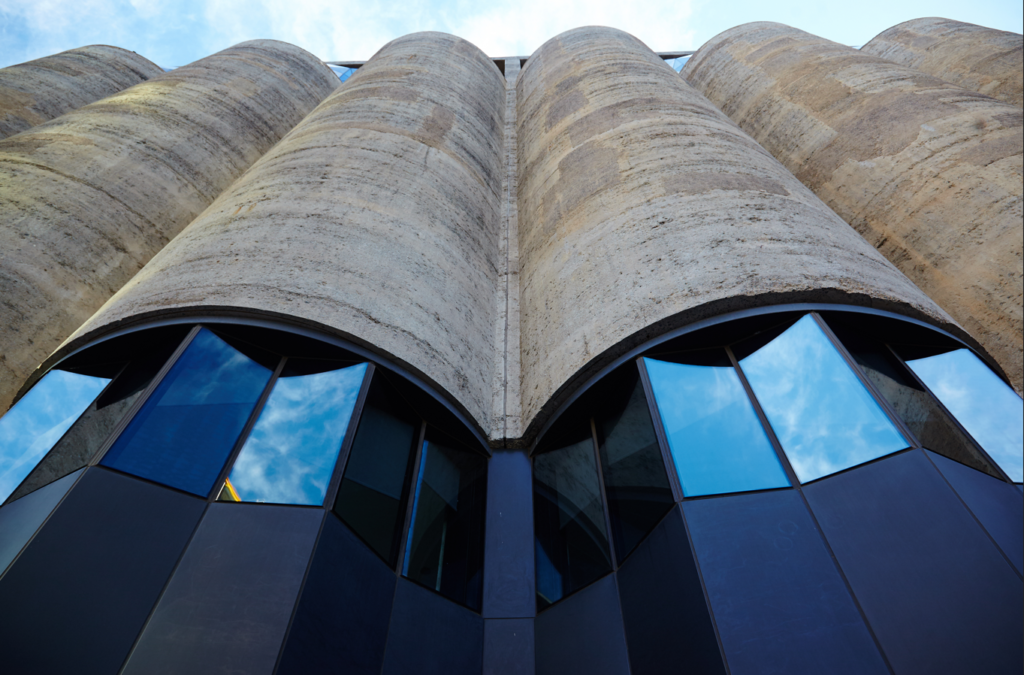
A particular kind of vertigo hits visitors the moment they step inside the Zeitz Museum of Contemporary Art Africa. You’re standing in what used to be a working grain silo, and suddenly you’re looking up ten storeys through a carved-out honeycomb of tubes toward a glass ceiling. It’s disorienting in the best way, and it tells you almost everything you need to know about what this museum, better known simply as Zeitz MOCAA, is trying to do: take something industrial and abandoned and turn it into one of the continent’s most important art spaces.
What Is Zeitz MOCAA?
Zeitz MOCAA is a public, not-for-profit museum located at Cape Town’s V&A Waterfront, focused exclusively on 21st-century art from Africa and its diaspora. Since opening in 2017, it has been described as the largest museum of contemporary art on the continent, and it now functions as one of the most visited cultural attractions in Cape Town.
What does Zeitz MOCAA mean? The name is a combination of two things: MOCAA stands for Museum of Contemporary Art Africa, and Zeitz refers to Jochen Zeitz, the German businessman and philanthropist whose personal art collection formed the founding core of the museum. Put together, the full name reads as the Zeitz Museum of Contemporary Art Africa, usually shortened in everyday use to Zeitz MOCAA.
The Zeitz Cape Town museum isn’t just another stop on a waterfront tourist trail. It’s a working art institution with a genuine permanent collection, an active education programme, and an ambition to reposition Africa at the centre of the global contemporary art conversation rather than at its margins.
The History of the Zeitz Museum of Contemporary Art Africa
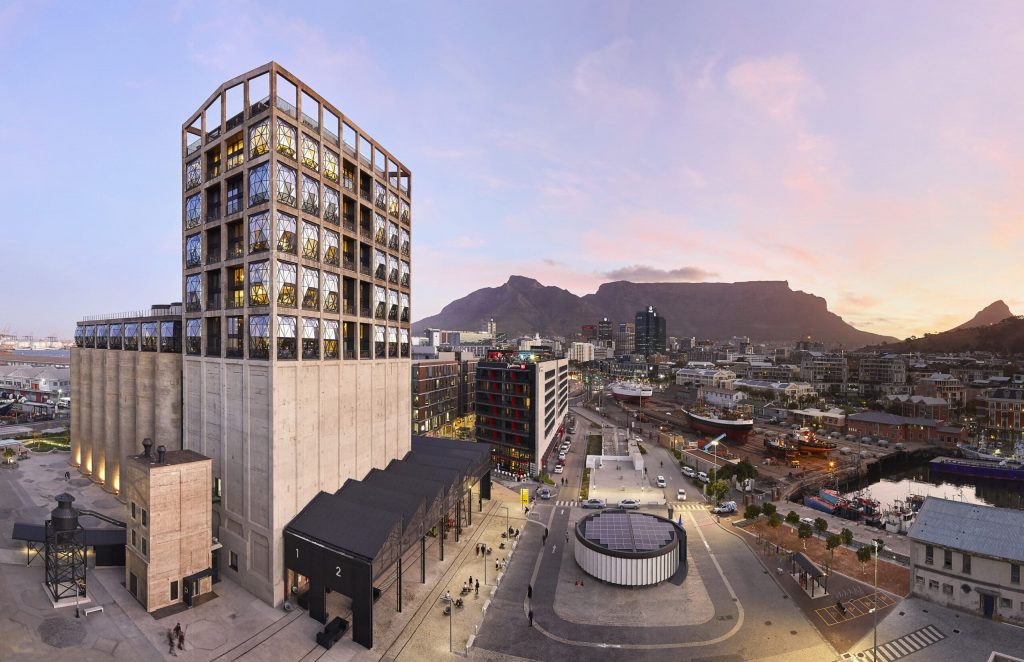
Long before it held a single artwork, the building at the heart of Zeitz MOCAA had its own history. At 57 metres, the Grain Silo Complex was once the tallest building in Cape Town when it went up in 1921, used for decades to store and grade maize brought in from across South Africa. The silo was decommissioned in 2001 and sat unused for years, slowly becoming a relic of the city’s industrial past rather than a landmark anyone would associate with art.
That changed when the museum’s founding partners, the V&A Waterfront and Jochen Zeitz, set out to transform the site. Zeitz’s own private collection became the founding core of what visitors see in the galleries today, and the museum was led for several years by executive director and chief curator Koyo Kouoh, who shaped much of its early curatorial identity. The Zeitz Museum Cape Town project officially opened its doors to the public on 22 September 2017, instantly becoming one of the most talked-about new museums in the world.
The Architecture: A Silo Reborn
What makes Zeitz MOCAA so distinctive isn’t only what hangs on its walls; it’s the building itself. London-based architect Thomas Heatherwick led the transformation, and his studio carved the museum’s galleries out of 42 densely packed cylindrical tubes that once made up the silo’s raw structure. Rather than demolishing the industrial shell, Heatherwick’s team hollowed out irregular, oblong shapes from the tube cluster to create a soaring central atrium and more than 100 individual gallery spaces spread across nine floors.
The result is a building that functions almost as a sculpture in its own right. Natural light pours in through overhead windows, and the cathedral-like atrium at the centre of the museum has become one of the most photographed interiors in Cape Town. It’s a rare case where the architecture of an art museum draws nearly as much attention as the art inside it, and it’s a major reason the Zeitz Art Museum shows up so often on lists of the world’s most striking new cultural buildings.
Size and Scale
When people search for the Cape Town Zeitz MOCAA or the Zeitz MOCAA gallery, they’re often trying to get a sense of just how big the place actually is. The numbers are genuinely impressive: roughly 9,500 square metres of custom-designed gallery and public space, more than 100 individual galleries, and nine floors built into a structure that once held nothing but grain. It stands as the largest museum dedicated to contemporary African art anywhere in the world, a title it has held since its opening.
What You’ll See Inside the Zeitz MOCAA Gallery Spaces
Zeitz MOCAA is exclusively focused on 21st-century art, meaning its galleries showcase work made by living and recent artists from across Africa and its global diaspora rather than historical or colonial-era pieces. Visitors can expect to encounter work from artists such as Kendell Geers, Ghada Amer, Kudzanai Chiurai, and Mouna Karray, alongside rotating temporary exhibitions and permanent collection displays that shift over time.
Beyond the main galleries, the museum also houses several dedicated spaces:
- The Centre for Art Education, focused on public learning and outreach programmes
- The Atelier, a project space reserved specifically for emerging, Cape Town-based artists
- A rooftop terrace and sixth-floor restaurant with sweeping 270-degree views of Table Mountain and the city
- A museum shop stocked with art books, prints, and locally made design objects
The museum’s mission goes well beyond simply hanging art on walls. It aims to build the careers of Africa’s most talented contemporary artists, strengthen art education across the continent, and keep the space genuinely accessible to a broad public rather than a narrow art world audience.
When We See Us: Zeitz MOCAA’s Landmark Exhibition
One of the most significant shows in the museum’s history is When We See Us: A Century of Black Figuration in Painting, which opened on 20 November 2022 and ran until 3 September 2023. Curated by Koyo Kouoh alongside co-curator Tandazani Dhlakama, the exhibition brought together nearly 200 artworks by 154 artists from 28 countries, making it the largest exhibition of its kind ever staged on the African continent.
The show focused on painting from the 1920s to the present, tracing how Black artists from Africa and its diaspora have imagined and asserted their own experiences, and it drew on artistic lineages including the Nsukka School in Nigeria, the École de Dakar in Senegal, and South Africa’s Federated Union of Black Artists. Its title was a deliberate flip of Ava DuVernay’s 2019 miniseries When They See Us, shifting the emphasis from being seen through someone else’s lens to a community seeing and asserting itself on its own terms. The exhibition was organised around six themes: The Everyday, Joy and Revelry, Repose, Sensuality, Spirituality, and Triumph and Emancipation, and it later travelled internationally, including a run at Bozar in Brussels in 2025. It remains one of the clearest examples of how Zeitz MOCAA uses its scale to platform African and diasporic art history on a genuinely global stage.
Where Is Zeitz MOCAA Located?
For anyone wondering where the Zeitz MOCAA museum is located, the answer is straightforward: it sits in the Silo District of the V&A Waterfront in Cape Town, South Africa, inside the converted Grain Silo Complex. This puts the museum within easy walking distance of the Waterfront’s shops, restaurants, and harbour views, as well as nearby attractions like the Two Oceans Aquarium, making it simple to combine a museum visit with a full day out.
Visiting Zeitz MOCAA in Cape Town
For anyone planning a trip, the practical details matter as much as the history. Opening hours run daily except on major public holidays, generally from around 10 am, and standard tickets allow single entry within a set window of the chosen date, often with fast-track entry included. Multi-attraction passes covering Zeitz MOCAA alongside dozens of other Cape Town sites are also available for visitors packing several activities into one trip.
Why Zeitz MOCAA Matters
A lot of contemporary African art has historically been shown, collected, and priced almost entirely outside the continent it comes from, filtered through European and American galleries and collectors. Zeitz MOCAA pushes back against that pattern by anchoring a world-class contemporary art institution firmly in Cape Town, giving African and diaspora artists a genuine home base rather than a stopover on someone else’s circuit. The building itself, an industrial ruin reborn as a monument to creativity, has become a symbol of that ambition in its own right, appearing on travel itineraries, architecture blogs, and international art calendars in equal measure since it opened.
Frequently Asked Questions
What is Zeitz MOCAA?
Zeitz MOCAA is a public, not-for-profit contemporary art museum in Cape Town, South Africa, dedicated to collecting, preserving, and exhibiting 21st-century art from Africa and its diaspora.
What does Zeitz MOCAA mean?
MOCAA stands for Museum of Contemporary Art Africa, and Zeitz refers to founding collector Jochen Zeitz, whose personal art collection formed the basis of the museum’s holdings.
Where is Zeitz MOCAA located?
The museum is located in the Silo District at the V&A Waterfront in Cape Town, South Africa, inside a converted historic grain silo.
Where is the Zeitz MOCAA museum situated exactly?
It sits directly within the V&A Waterfront precinct, one of Cape Town’s most visited tourist and dining areas, making it easy to reach on foot from nearby hotels, shops, and restaurants.
When did Zeitz MOCAA open?
The museum opened to the public on 22 September 2017.
Who designed the Zeitz Museum of Contemporary Art Africa building?
The transformation of the grain silo into a museum was led by London-based architect Thomas Heatherwick and his studio.
What was When We See Us at Zeitz MOCAA?
When We See Us: A Century of Black Figuration in Painting was a landmark 2022 to 2023 exhibition at Zeitz MOCAA featuring nearly 200 works by 154 artists, exploring Black self-representation in painting from the 1920s to the present.
What kind of art does Zeitz MOCAA display?
The museum focuses exclusively on 21st-century contemporary art created by artists from Africa and its global diaspora, spanning painting, sculpture, photography, and installation work.
Whether you’re an art world regular or just passing through the V&A Waterfront, the Zeitz Museum of Contemporary Art Africa offers something rare: a chance to see contemporary African art on its own terms, inside a building that’s just as worth the visit as the work hanging inside it.