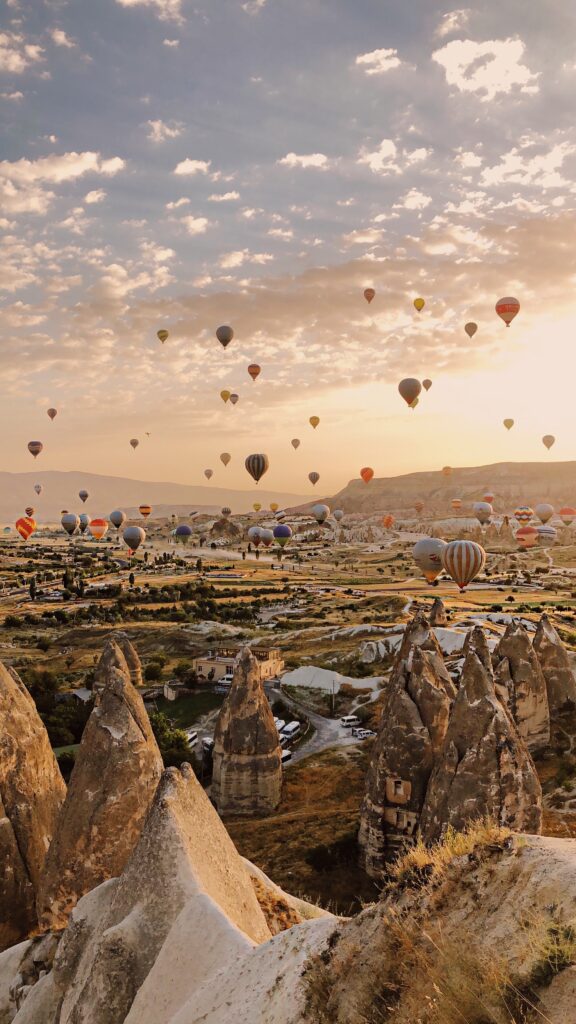
In Cappadocia, wine is made underground. The region’s cellars are cut into volcanic rock, and growers say the constant 8 to 10 degrees Celsius inside improves the wine. The tradition is old. It now operates under some of the tightest alcohol rules in the world.
The grape’s history in Anatolia is far older than those rules. Southeastern Anatolia is considered one of the two places where the grapevine was first domesticated, between roughly 9,500 and 5,000 BCE. Today, Turkey is an odd case. It has the world’s fifth-largest vineyard area, about 410,000 hectares, according to the OIV, yet very little of that harvest becomes wine.
How Little Becomes Wine
The figure depends on who is counting. The OIV’s 2019 report put the share of the harvest used for winemaking at 3%. The US Department of Agriculture’s Ankara office is more generous: it put wine at 9% of 2023 production, with table grapes and raisins taking most of the rest. By either count, most Turkish grapes are eaten fresh or dried.
What the 2013 Law Does
Turkey has never banned wine. The rules come from Law No. 6487 of 2013, which amended the older Law No. 4250 on the alcohol monopoly, with Article 6 setting the limits on sale and promotion. In practice:
- Alcohol advertising is banned in every medium, including TV, radio, cinema, print, social media and digital platforms.
- Promotional campaigns and events are not allowed, apart from trade fairs and scientific activities, and producers cannot use their brands to sponsor events.
- Retail sales are halted between 10 pm and 6 am.
- An alcohol brand caught on camera in a TV report is blurred out.
In June 2027, the rules tightened again. A new omnibus law published in the Official Gazette bars alcohol companies from using their names, brands, logos or packaging images to sponsor any event or content on any platform. Bars, restaurants and shops also cannot display them inside or outside their premises, and licensed businesses have until June 20, 2027 to comply. The same law forbids using one brand across beer or wine and distilled spirits.
Who Is Allowed to Operate
Small producers feel the squeeze most. A local winemaker told wine writers visiting Cappadocia that Kocabağ and Turasan have been allowed to operate for tourism as historical institutions, while for many new wineries a sustainable business is close to impossible.
Turasan is the clearest example of the older kind. It was founded in 1943 by Hasan Turasan, a primary-school teacher in Ürgüp, and is now managed by the third generation. Output reached one million litres in 2003, once tourism took off in Cappadocia. One visitor’s account says it is the only winery in Turkey to make a 100% Emir wine.
Grapes Worth Asking For
Turkey has 1,435 grape varieties, according to the Tekirdağ Viticulture Research Institute, most of them on old vines. Three to look for:
- Emir is Cappadocia’s own white. It thrives on the region’s mineral-rich volcanic soils at around 1,200 metres and copes with the harsh, cold winters. It is crisp and high in acid, and critics often compare it to Chablis.
- Öküzgözü and Boğazkere are the pairing of eastern Anatolia, known as “Bull’s Eye” and “Throat Burner”. One is soft and fruity, the other severely tannic, and when blended, they balance each other.
- Kalecik Karası, from near Ankara, is light, with rosewater and sour cherry, and is often compared to Pinot Noir.
Where to Go
- Ürgüp, Cappadocia. Turasan offers free tastings at the counter and paid private tours of the winemaking facilities and caves. Ask for the Emir.
- Istanbul. Wine bars that list bottles by grape and village rather than by brand.
- Urla and Alaçatı. Newer Aegean producers working with native yeasts in old stone buildings.
Why We Cover It
The bottles are still being made, mostly out of sight. Table Talk writes about food, wine, art, travel and culture to notice who keeps making things when conditions are hard. In Cappadocia, that means families and small cellars working in a country that will not let them advertise.
The cave wine is still there. You just have to know to ask.